

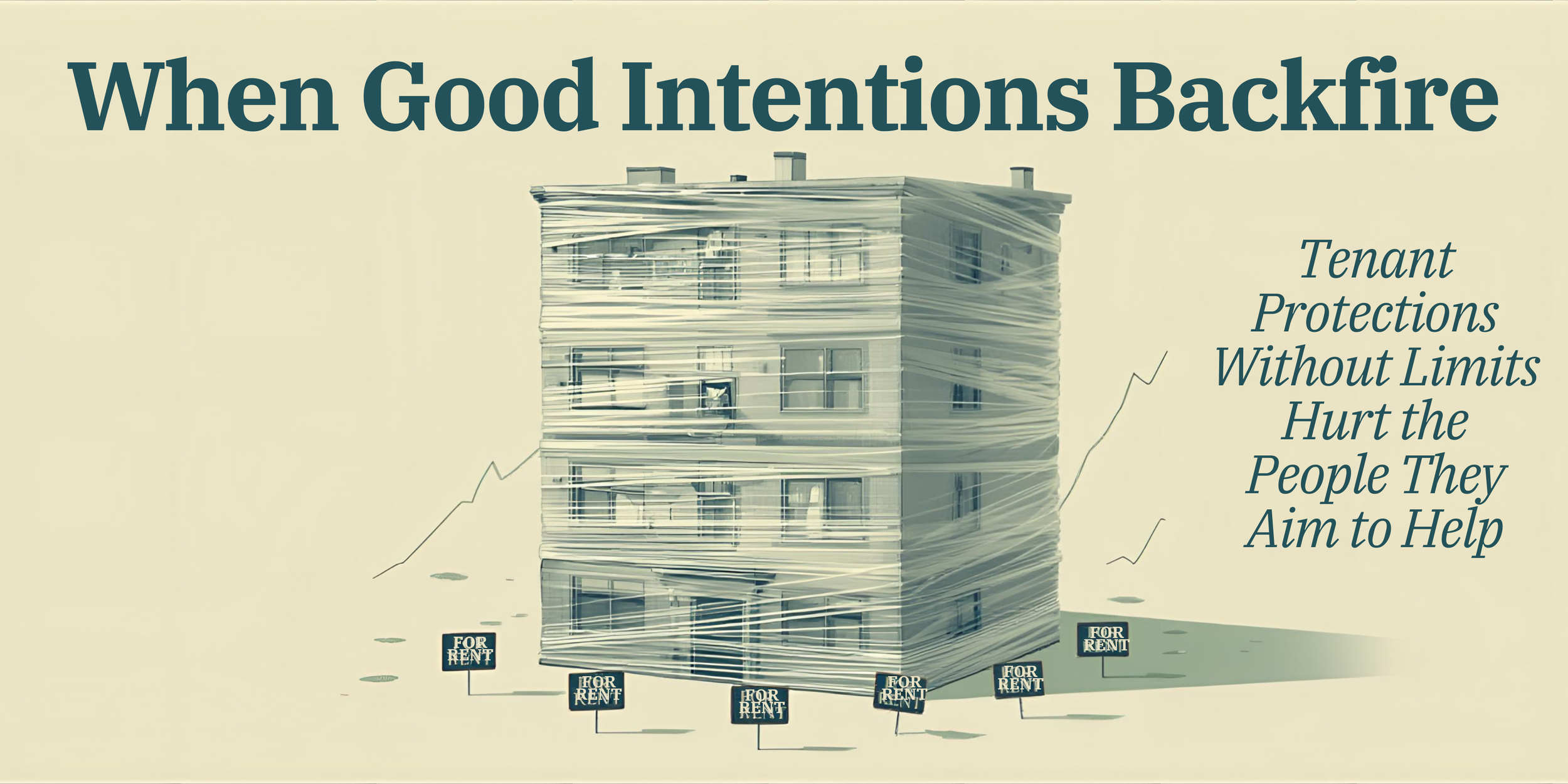
When Good Intentions Backfire: Why Excessive Tenant Protections Can Raise Rents, Reduce Upkeep and Supply
Understanding How Overregulation Affects Your Housing Options
When you are simply trying to find a safe, stable place to live, housing policies can feel distant and confusing. Yet the rules created to protect you as a renter can sometimes have the opposite effect, making it harder to find quality homes and pushing rents higher over time.
At Marquise Properties, we believe in “Quality Living for All.” That means being honest about how expansive tenant protection rules can unintentionally reduce the supply of well-managed rental properties in Maryland, strain relationships between tenants and owners, and limit real housing choice for the very people they aim to help.
Independent research has found that when protections become extremely rigid or expansive, they can shrink the pool of available homes and raise costs in ways that ultimately hurt renters.
How Expansive Tenant Protections Can Backfire
Stronger protections for renters are important, but when regulations go too far or are written without considering long-term effects, housing options can shrink.
A 2019 study of San Francisco’s rent control expansion (Diamond, McQuade, and Qian) found that tighter controls led to a 15% reduction in the supply of rental housing in the affected segment, which in turn contributed to city-wide rent increases of about 5%. Those higher city-wide rents directly impacted renters who were not covered by the controls.
A National Bureau of Economic Research (NBER) analysis of strict rent regulations in several cities concluded that while a subset of long-term tenants gained short-term stability, the broader effect was reduced construction of new rental housing and less maintenance of existing units, conditions that ultimately limit options and quality for many tenants.
In jurisdictions with highly rigid eviction and screening rules, reports from housing industry groups show that a significant share of small property owners, often those offering more affordable units in older buildings, choose to sell or leave the market entirely, reducing the number of homes available to renters with modest incomes.
When fewer owners are willing to offer rental homes, the result can be fewer available units, older properties that are not updated, and higher prices for the homes that remain. For tenants, this isn’t just a policy debate; it shows up in day-to-day life.
Over time, overly restrictive tenant protections can mean:
Fewer available rental properties in Maryland as owners choose to sell or convert homes, forcing tenants to compete for a smaller pool of units
Slower upgrades and renovations, since owners are less confident they can recover improvement costs, leaving renters in older homes with outdated systems and less comfort
Strained communication when owners fear that any misstep could bring penalties, making it harder for tenants to get flexible solutions or informal accommodations
Longer wait times for needed maintenance if income from the property is squeezed too tightly, which can directly affect your comfort, safety, and health
A tenant-focused approach recognizes that long-term housing stability depends on both fair protections and a healthy rental market where owners can responsibly maintain, improve, and expand the housing supply. When regulations overlook this balance, renters are often the ones who feel the unintended consequences most.
Why Overregulation Can Hurt the Tenants It Aims to Help
Research on strict rent controls and highly rigid eviction policies shows a common pattern: a small group of long-term tenants may benefit, but many others face reduced choices, higher move-in rents, and fewer opportunities to move into neighborhoods they prefer.
For example:
Studies of strict rent control in New York City and San Francisco have documented that while protected tenants may enjoy below-market rents, new renters often encounter much higher initial rents because the reduced supply allows remaining units to command a premium. This makes it harder for families, young renters, and new arrivals to secure affordable housing.
When small and mid-sized owners leave the rental market, their homes are frequently converted to owner-occupied housing or higher-end rentals. This reduces the stock of mid-priced units that many working tenants rely on.
Evidence from markets with very stringent tenant screening and eviction restrictions indicates some owners respond by tightening their application standards. That can make it harder for renters with limited credit history, lower incomes, or prior rental challenges to be approved, even when they are fully capable of being good tenants.
Policy reviews by housing organizations examining New York City’s long-standing rent regulations have documented deferred maintenance and slower renovation cycles in heavily regulated units, especially in older buildings.
These outcomes run directly against the goal of tenant protections: instead of broad access to safe, stable, and affordable homes, overregulation can result in a smaller, more expensive, and less flexible rental market.
Why Property Quality Can Decline Under One-Sided Rules
Extensive tenant protections can also affect how owners approach maintenance and upgrades. When regulations make it harder to enforce lease terms, collect rent, or address chronic property damage, some owners delay nonessential improvements or scale back investment in finishes and amenities.
Studies in areas with strict rent controls have documented slower renovation cycles and lower overall property upkeep. For example, policy evaluations in New York City and other long-regulated markets have shown that heavily regulated buildings, especially older stock, are more likely to have deferred maintenance and fewer modern upgrades when compared to similar, less-regulated properties.
For older properties, this can mean:
Deferred upgrades to kitchens, baths, and energy systems
Slower response to non-urgent repairs and cosmetic issues
Less incentive to modernize units between tenancies
This is not because owners do not care about quality. It is often a financial response to higher compliance costs, longer timelines to resolve serious lease violations, and reduced ability to adjust rents in line with rising expenses. Over time, these pressures can erode the quality of rental properties in Maryland, which affects both residents and communities.
Why Balanced Policy Protects Tenants Better
When rules are extremely rigid, smaller local owners are often the first to step back from offering rentals. This can leave renters with fewer choices and can concentrate power in the hands of only the largest operators. Research on strict rent control environments has shown that while a limited group of long-term tenants may benefit, many other renters face reduced supply, higher move-in rents, and less mobility.
Balanced, clearly defined tenant protections support you in several ways:
You can more easily find well-managed rental properties in Maryland that are safe, updated, and properly maintained because owners have the confidence and resources to keep improving their homes.
You are more likely to build a respectful, responsive relationship with your property manager or owner because both sides understand the rules and can communicate without constant fear of punitive outcomes.
You gain clear expectations about rent, maintenance, and lease terms, helping you plan your budget and long-term housing decisions.
You benefit when owners are confident enough to invest in better amenities, energy efficiency, and community improvements that directly enhance your daily life.
By focusing on balance, tenant protections can do what they are meant to: keep you safe from unfair treatment and sudden displacement, while still allowing enough flexibility and incentive for owners to keep homes available, livable, and fairly priced.
At Marquise Properties, we see every day how open communication, transparent rental requirements, and fair processes can protect tenants while also keeping properties in good condition and available for future renters.
What You Can Expect From a Balanced, Tenant-First Approach
A thoughtful approach to tenant protections starts with clarity. You deserve to know the rental requirements, how the application works, and what happens if issues arise. Clear guidelines help prevent misunderstandings and make it easier for you to plan, budget, and stay in good standing.
With full-service property management, you can expect support throughout the rental lifecycle. That includes:
Help finding a home that fits your needs and budget
Easy ways to submit maintenance requests online so problems are documented and addressed
Secure rent payment options that help you stay on track
A knowledgeable team to address concerns, explain lease terms, and help you understand your rights and responsibilities
When policies are fair to both tenants and property owners, it becomes possible to maintain properties well, respond quickly, and keep more homes available across different price points. This directly benefits renters by keeping more options on the market and reducing the pressure that drives prices up.
Why Marquise Properties Supports Quality Living for All
Marquise Properties focuses on creating rental experiences where both tenants and owners feel heard, respected, and informed. We understand from both research and experience that good intentions in policy are not enough if the result is fewer homes, rising rents, or declining property conditions for renters.
By combining professional property management, thoughtful leasing practices, décor and staging services, and resources for investors, we support a rental ecosystem that can grow rather than shrink. Our work with rental properties in Maryland and beyond is grounded in responsiveness, transparency, and a commitment to housing quality.
We pay close attention to research and data on how expansive tenant protections affect real renters. Those findings are clear: when regulations become so strict that they reduce new construction, discourage maintenance, or drive smaller owners out of the market, tenants end up with fewer choices, higher costs, and less flexibility.
When regulations, property management, and resident needs are balanced, renters benefit from:
More options across different neighborhoods and price points
Better maintained homes with ongoing upgrades and safety improvements
A more stable housing future, with less risk that reduced supply will push rents sharply higher
Our goal is to keep the focus where it belongs: on safe, quality living for every resident and on a rental market that gives you real choices, not fewer. By supporting tenant protections that are strong but balanced, we aim to help ensure that the rules designed to help you do not unintentionally make it harder to find and keep a home.
Secure a Better Renting Experience Today
If you are ready to find well-maintained, fairly priced rental properties in Maryland, we are here to help you navigate the market with confidence. At Marquise Properties, we focus on matching responsible tenants with quality homes while keeping the rental process transparent and straightforward.